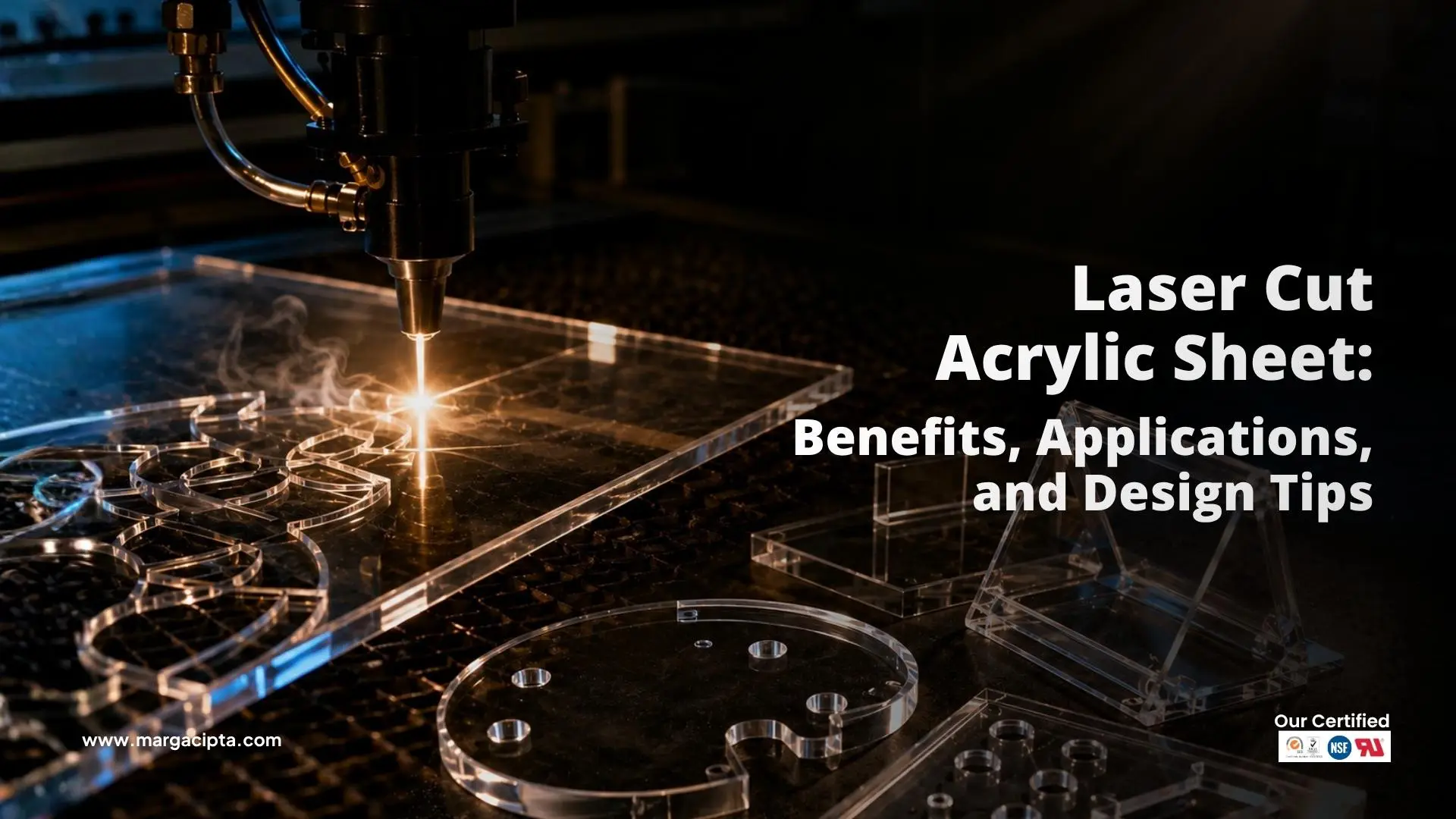
Laser Cut Acrylic Sheet: Benefits, Applications, and Design Tips

Informational

Laser cut acrylic sheet is widely used because it delivers clean edges, precise cuts, and exceptional design flexibility. 

From retail displays and signage to decorative products and industrial components, laser cutting allows acrylic sheets to be fabricated into intricate shapes with high accuracy.

Its precision and efficiency make laser cutting one of the most popular fabrication methods for acrylic.

What Is Laser Cutting?

Laser cutting is a fabrication process that uses a focused laser beam to cut acrylic sheets with exceptional precision.

The concentrated heat melts and vaporizes the material along the cutting path, producing smooth edges that often require minimal finishing.

This method is suitable for both simple shapes and highly detailed designs.

Read also: Acrylic Sheet for Menu Holders: Durable Display Solutions

Benefits of Laser Cut Acrylic Sheet

1. High Precision

Laser cutting can produce complex patterns and intricate details with consistent accuracy.

This makes it ideal for custom products and decorative applications.

2. Smooth, Polished Edges

One of the biggest advantages of laser cutting is the clean edge finish.

High-quality acrylic sheets often produce polished edges directly from the cutting process, reducing the need for additional finishing.

3. Efficient Production

Laser cutting supports both prototype development and large-scale manufacturing.

Its automation capabilities help improve productivity while maintaining consistent quality.

4. Design Flexibility

Laser-cut acrylic can accommodate a wide range of creative and functional designs, from simple geometric shapes to intricate decorative patterns.

Common Applications

Laser-cut acrylic sheets are widely used across various industries. Popular applications include:

1. Signage

Custom business signs, illuminated letters, and branding elements.

2. Retail Displays

Product stands, display cases, shelf organizers, and promotional fixtures.

3. Decorative Products

Wall décor, ornaments, cake toppers, and personalized gifts.

4. Office and Commercial Displays

Directory signs, information boards, and nameplates.

5. Industrial Components

Machine covers, protective panels, and fabricated plastic parts.

Design Tips for Better Results

To maximize laser cutting quality, consider the following:

1. Choose the Right Thickness

Different applications require different acrylic thicknesses to balance durability and precision.

2. Use High-Quality Acrylic

Premium acrylic sheets typically produce cleaner cuts and smoother edges.

3. Optimize Design Files

Vector-based artwork helps ensure accurate cutting and consistent production.

4. Consider Material Finish

Clear, colored, satin, frosted, and mirrored acrylic each create different visual effects in finished products.

Why Material Quality Matters

Laser cutting results depend not only on the machine but also on the quality of the acrylic sheet. High-quality acrylic offers:

  • Better cutting consistency
  • Cleaner polished edges
  • Reduced risk of defects
  • Improved dimensional accuracy
  • More professional final appearance

Marga Cipta supplies premium acrylic sheets suitable for laser cutting, engraving, CNC machining, and other fabrication applications.

Read also: What Acrylic to Use for Cake Topper: A Complete Material Guide

Conclusion

Laser cut acrylic sheet combines precision, efficiency, and design flexibility, making it one of the best fabrication solutions for modern acrylic products.

Whether you're creating signage, retail displays, decorative items, or custom components, using high-quality acrylic sheets helps ensure clean cuts and professional results.

Marga Cipta offers premium acrylic sheets in various thicknesses, colors, and finishes for laser cutting and custom fabrication projects.

For inquiries or orders, email info@margacipta.com.

For product information, inspiration, and the latest updates, follow Instagram @margacipta.

News Release

Best Acrylic Thickness for Ornaments: Size Guide for Perfect Results

The best acrylic thickness for ornaments is typically between 2 mm and 3 mm.

This range provides the ideal balance between durability, lightweight structure, and ease of cutting.

Choosing the right thickness is crucial to ensure that ornaments are strong enough to hold their shape while still looking clean and refined.

Why Thickness Matters for Ornaments

Ornaments are often designed to be lightweight and decorative. Using the wrong thickness can affect both appearance and performance:

  • Too thin → may bend or break easily
  • Too thick → looks bulky and harder to cut

The right thickness ensures a professional finish without compromising functionality.

Read also: Colored Acrylic Sheet for Ornaments: Types, Colors, and Applications

Recommended Thickness Based on Use

Here’s a practical guide:

2 mm acrylic sheet

  • Best for small and lightweight ornaments
  • Ideal for hanging decorations and detailed designs

3 mm acrylic sheet

  • Suitable for slightly larger or layered ornaments
  • Provides better rigidity and durability

For most applications, these two thickness options cover the majority of design needs.

Factors to Consider When Choosing Thickness

1. Ornament Size

Larger ornaments require thicker acrylic to maintain shape and prevent bending.

2. Design Complexity

Intricate designs benefit from thinner sheets for easier cutting and finer detail.

3. Usage Type

If the ornament will be handled frequently or used long-term, slightly thicker acrylic offers better durability.

Fabrication Considerations

Acrylic sheets are widely used in fabrication processes such as:

  • Laser cutting
  • Engraving
  • UV printing

Using the correct thickness ensures clean edges, precise cuts, and minimal material waste.

Thinner sheets are easier to cut, while thicker sheets provide a more solid feel.

Why Acrylic is Ideal for Ornaments

Acrylic is a preferred material because it offers:

  • Smooth surface for clean finishing
  • High clarity and color options
  • Lightweight structure
  • Good durability for decorative use

These qualities make it suitable for both handmade and mass-produced ornaments.

Read also: Acrylic vs Glass for Plaque: Which Material is Better?

Importance of Material Quality

Even with the right thickness, material quality plays a key role.

High-quality acrylic sheets provide:

  • Consistent thickness
  • Better cutting performance
  • Reduced risk of cracking

For businesses, this ensures more efficient production and consistent output.

Marga Cipta offers high-quality acrylic sheets suitable for various ornament applications, supporting both small-scale and bulk production needs.

Conclusion

The best acrylic thickness for ornaments is generally between 2 mm and 3 mm, depending on size and design.

By choosing the right thickness and using high-quality acrylic sheets, you can achieve ornaments that are durable, lightweight, and visually appealing.

Ready to explore our cast acrylic options? At Margacipta Wirasentosa, we offer high-quality clear cast acrylic sheets from 100% virgin MMA in various thicknesses and custom sizes to fit your needs.

Reach to our Instagram or download our Product Catalog for more information.

The Global Roller Coaster – Closed for the Season?

May 10, 2019May 11, 2019 mcwsi


Are the days of monthly acrylic price creep behind us? Are we entering a period of regular price drops? Will price stability level the playing field and reduce the risks of pricing shenanigans? Here we are, one year after our 2018 Global MMA Roller Coaster assessment considering the impact of a reverse pricing trajectory that is challenging purchasing and marketing managers throughout the supply chain.


MMA prices (methyl methacrylate, the raw material used to produce a wide range of products distributed by IAPD members) have declined about 25% since their 2018 peak levels. Some distributors are enjoying richer profit margins while others are losing market share to aggressive players betting the decline will continue.


In short, soft demand, over supply of MMA and the possible threat of trade war tariffs at most levels of the supply chain have played a part in the current trends. Since the 1st Qtr ’19, prices in China have not decreased further indicating some stability. The South East Asian markets, however, continue to show weakness that point to further declines. In fact, we anticipate another price drop in May as South East Asian MMA demand is still oversupplied.


While stocks and output seem to have completed the needed adjustments during the 1st Qtr, the overall softer market does not warrant any price rebound. Any further price drops should not reach the magnitude of the previous quarter. We have probably hit bottom and any China price increase will be offset by other markets.


In the U.S., fires at some Lucite tanks will disrupt domestic supply. The same situation is affecting Brazil. Once those suppliers replenish, and barring any further unforeseen events, prices should remain level through the end of the year.


MARGACIPTA, Asia’s largest cell cast manufacturer, closely monitors MMA prices on a regular basis in order to provide our clients with the latest pricing data. Keep in touch with us or your sales reps as you manage your inventory positions and make smarter purchasing and marketing decisions possible.


Acrylic, MMA Acrylic, Asia, Global MMA, internatiional, MMA, pricing

Food Grade Acrylic: Safe Choice for Your F&B Business

When it comes to materials used in the food industry, safety and durability are top priorities. One of the most trusted materials is food grade acrylic

This type of acrylic is specially manufactured to meet strict safety standards, making it suitable for direct contact with food and beverages.

What is Food Grade Acrylic?

Food grade acrylic is a high-quality plastic material that has been tested and certified to be safe for use with food. 

Unlike regular acrylic, it does not contain harmful substances that could contaminate food or drinks. It is also resistant to bacteria, easy to clean, and highly durable.

Read also: Benefits of Using Clear Cast Acrylic Sheet

Is Acrylic Safe for Food?

Yes, acrylic is safe for food as long as it is certified as food grade

Regular acrylic may not always meet safety standards, but food grade acrylic has been tested to ensure it does not leach harmful chemicals or contaminants. 

Always look for products with FDA or NSF certification to guarantee safety in food applications.

Benefits of Using Food Grade Acrylic

  1. Safe for Food Contact
    Certified food grade acrylic complies with international safety standards, ensuring it is non-toxic.
  2. Durable and Long-Lasting
    It is highly resistant to impact and does not easily crack, making it ideal for everyday use in the food industry.
  3. Crystal Clear Transparency
    Glass-like clarity, making food grade acrylic gives excellent visibility, perfect for displays, food containers, or protective covers.
  4. Lightweight and Easy to Handle
    Compared to glass, acrylic is much lighter, making it easier to transport, install, and maintain.

Read also: Do’s and Don’ts: Cleaning Acrylic Sheet the Right Way

Applications of Food Grade Acrylic

Food grade acrylic can be found in various food-related industries, including:

  • Food displays and covers in restaurants and bakeries
  • Storage containers for dry goods or liquids
  • Protective shields for hygienic food preparation areas
  • Tableware and serving trays for commercial or household use

Choosing food grade acrylic ensures safety, durability, and hygiene for any food-related application. 

Looking for high-quality food grade acrylic sheets? MC® Cast Acrylic Sheets are NSF-certified for clear and white opal variants, trusted for consistent quality and safe use in food contact applications.

Contact us on info@margacipta.com for more details.

Is Acrylic Waterproof? Understanding Its Water Resistance

Yes, acrylic is waterproof. Acrylic sheets do not absorb water and can maintain their structural integrity even when exposed to moisture, rain, or humid environments.

This water resistance is one of the reasons acrylic is widely used in applications ranging from signage and displays to aquariums and protective barriers.

However, understanding what "waterproof" means in the context of acrylic can help ensure the material is used appropriately.

What Does Waterproof Mean for Acrylic?

When people ask whether acrylic is waterproof, they typically want to know whether water can damage the material.

Acrylic's non-porous surface prevents water from penetrating the material, which means it does not:

  • Swell
  • Rot
  • Rust
  • Absorb moisture

This makes acrylic a reliable material for environments where water exposure is common.

Read also: Why Does Acrylic Become Brittle? Common Mistakes You Should Avoid

How Does Acrylic Perform in Wet Conditions?

Acrylic performs exceptionally well when exposed to water.

Unlike wood or certain composite materials, acrylic remains stable even after repeated contact with moisture.

It can be used in environments such as:

  • Outdoor installations
  • Bathrooms
  • Aquariums
  • Decorative water features
  • Protective covers

Its resistance to moisture helps preserve both appearance and functionality.

Is Acrylic Suitable for Outdoor Rain Exposure?

Yes. Acrylic is commonly used outdoors because it can withstand rain and humidity without deterioration.

When paired with its natural UV resistance, acrylic becomes an excellent option for:

  • Outdoor signage
  • Display panels
  • Architectural features
  • Protective barriers

High-quality acrylic sheets can maintain their clarity and performance for years in outdoor environments.

Acrylic vs Other Materials in Wet Environments

Compared to many traditional materials, acrylic offers several advantages.

Acrylic vs Wood

Wood can absorb water, expand, and deteriorate over time. Acrylic remains unaffected by moisture.

Acrylic vs Metal

Certain metals can rust when exposed to water. Acrylic does not corrode.

Acrylic vs Glass

Both materials resist water, but acrylic offers the added benefits of lighter weight and greater impact resistance.

Applications That Benefit from Acrylic's Water Resistance

Many industries rely on acrylic because of its ability to perform in wet environments.

Common examples include:

  • Aquariums
  • Splash guards
  • Outdoor signage
  • Retail displays
  • Interior partitions
  • Decorative installations

Its combination of water resistance and visual clarity makes it a versatile material for both functional and decorative uses.

Read also: What is Satin Acrylic? A Complete Guide to Its Look and Function

Does Water Affect Acrylic Over Time?

Water itself generally does not damage acrylic.

However, performance can be affected if acrylic is exposed to:

  • Harsh cleaning chemicals
  • Improper installation
  • Extreme mechanical stress

Using proper maintenance techniques helps preserve the material's appearance and durability.

Why Material Quality Matters

The quality of the acrylic sheet plays a significant role in long-term performance.

Premium acrylic typically offers:

  • Better clarity
  • More consistent thickness
  • Improved weather resistance
  • Enhanced durability

Marga Cipta supplies high-quality acrylic sheets suitable for applications that require durability, transparency, and reliable water resistance.

Conclusion

Is acrylic waterproof? Yes, acrylic is highly water-resistant and does not absorb moisture.

Its waterproof characteristics, combined with excellent clarity and durability, make it a preferred material for both indoor and outdoor applications.

By choosing high-quality acrylic sheets, businesses and fabricators can maximize performance in wet and humid environments.

Ready to explore our cast acrylic options? At Margacipta Wirasentosa, we offer high-quality clear cast acrylic sheets from 100% virgin MMA in various thicknesses and custom sizes to fit your needs.

Reach out to our Instagram or download our Product Catalog for more information.